
Updated 3 November 2026 | Auction format and player availability need final confirmation.
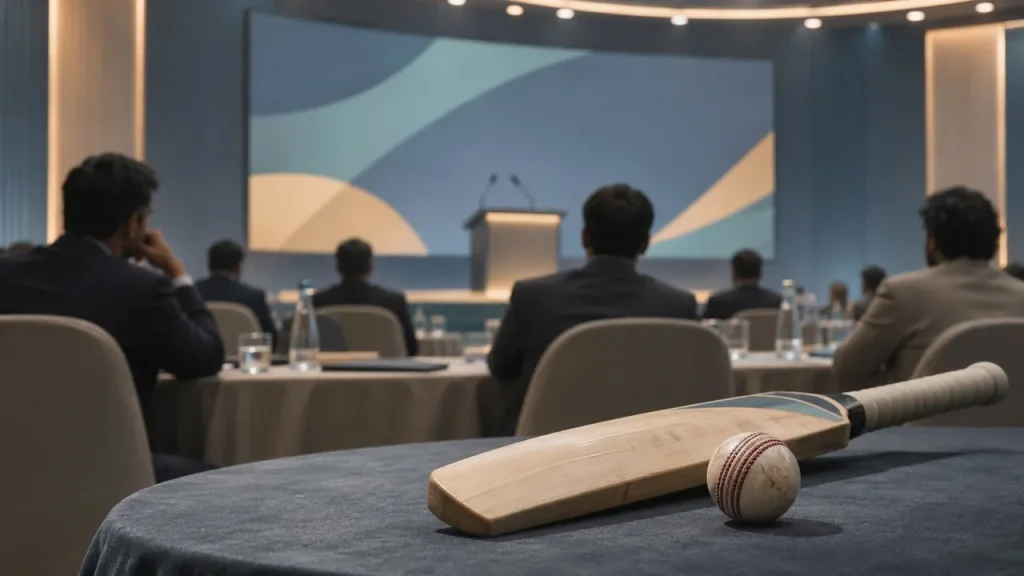
The title says “mega auction,” but the key planning point is that IPL 2027 is widely reported as a mini auction in the final year of the current player cycle. The BCCI has confirmed the 2027 IPL will be the league’s twentieth edition; current reporting points to a December auction and a larger reshaping ahead of 2028. That means teams are more likely to fill specific gaps than rebuild from scratch. This preview keeps the requested title for search clarity while correcting the premise: treat 2027 as a targeted auction unless the IPL Governing Council announces a different format.
No franchise should assume a particular player will be available until retention and release lists are official. The names below are examples of profiles and conditional targets, not confirmed auction entrants. We will update this guide when the league publishes its player pool and rules. For India’s international calendar around the auction window, see our 2026–27 schedule.
Will IPL 2027 have a mega auction?
As of 3 November 2026, reports describe the upcoming event as a mini auction, with the 2027 edition closing the current cycle and the next major squad reset expected before 2028. The precise auction date, venue, retention rules and purse should be treated as provisional until confirmed in an official IPL or BCCI notice. A mini auction changes team strategy. A franchise can keep its settled core and spend on one or two roles, while a mega auction forces every side to make wider decisions about retention, balance and long-term identity.
For this reason, the best “target list” is a scouting framework. Franchises should first study their likely retained squad, remaining purse, overseas slots, local-player needs and home conditions. The objective is to buy a role that improves the XI, not simply a famous name who duplicates a strength.
The roles every franchise should scout
1. A powerplay opener who can also handle movement
Teams need at least one top-order batter who can score quickly without relying only on flat pitches. In a mini-auction, an opener becomes a priority if the squad has an unstable first-wicket partnership or lacks a left-right combination. A good target can leave well, access both sides of the ground and turn a quiet powerplay into a competitive start. Before bidding, analysts should compare powerplay strike rate with dismissal rate and performance against pace and spin. A few spectacular innings do not automatically prove a player can deliver consistently.
2. An Indian middle-order batter with range
Indian batters who can play spin in the middle overs and accelerate late are valuable because they free franchises to use overseas slots elsewhere. Teams should look for a player who can rotate strike against defensive fields, clear the boundary when match-ups favour it and bat at more than one position. Potential names such as Rinku Singh or Tilak Varma may attract discussion if their status changes, but neither should be described as available without the official list. The right target depends on team composition and price, not a headline ranking.
3. A genuine finishing option
Chasing teams often need a batter who can enter with a high required rate and still make sensible choices. Franchises should examine death-over boundary percentage alongside dot-ball rate, running between the wickets and results against yorkers and slower balls. If a player only succeeds when arriving early, that is a different role from finishing the last four overs. A clear job description helps the coach and auction table avoid paying for a skill set the XI cannot use.
4. A pace-bowling all-rounder
Fast-bowling all-rounders create balance: they can add a batting position while covering overs. They are also among the most expensive profiles because genuine two-skill players are scarce. Teams must distinguish a part-time bowler from someone who can deliver a planned spell under pressure. A target like Nitish Kumar Reddy could be relevant if available, but his price, fitness, workload and release status must be verified. A franchise should set a ceiling before bidding and avoid treating a short run of form as proof of a complete all-round role.
5. A wrist-spinner or middle-overs wicket-taker
Many T20 matches are won by taking wickets between the powerplay and the death. A wrist-spinner can create dismissal chances when batters are trying to preserve momentum, while a defensive spinner may control runs but offer fewer breakthroughs. The choice should fit the home ground and the rest of the bowling attack. If a squad already has a finger-spinner who controls one end, it may need a different angle rather than a duplicate. Players such as Ravi Bishnoi can be discussed as role examples, but auction availability must not be assumed.
6. A death bowler with repeatable plans
Death bowling is not only about speed. Franchises should examine yorker accuracy, slower-ball control, wide-line execution and performance when batters know what is coming. A bowler who can deliver two distinct plans is often more useful than a quicker bowler with one predictable option. Overseas pace depth can help, but teams must account for national duty and availability windows. Medical history, recent overs and backup coverage belong in the decision alongside statistics.
7. A wicketkeeper who improves the batting order
In a compact squad, the wicketkeeper’s batting slot matters. A keeper who can open, bat at No. 3 or finish gives the captain more flexibility and allows an extra specialist bowler. Franchises should look at glovework under pressure as well as batting output, and they should identify a credible reserve. A replacement keeper is a common contingency that should not be left until the final rounds of the auction.
How each franchise should make its shortlist
Start with a role map: likely first XI, substitutes, backups and the weaknesses exposed in close matches. Then divide targets into tiers. Tier one should contain players who solve a clear gap; tier two can cover the same role at a lower cost; tier three should include uncapped or emerging options with upside. Each name should have a maximum bid. Auction rooms create urgency, but a disciplined team can walk away when the price exceeds expected value.
Next, model combinations rather than individual signings. One expensive batter may be less valuable than a lower-cost bowler plus an Indian backup keeper. Teams must also preserve enough purse for replacements during the season. If international players have limited availability, the franchise needs a like-for-like reserve instead of assuming its preferred XI will remain fit for the full tournament.
What fans should watch before the auction
The most useful signals will be official retention and release lists, updated squad rules, purse allocations, overseas-player registration and the final auction pool. Rumours can generate interest, but they do not establish availability. The announced player list can also be narrowed from the initial registration pool, so a player’s name in a report does not guarantee a bid. Once official lists arrive, the analysis can move from hypothetical roles to team-by-team plans.
Frequently asked questions
Is IPL 2027 definitely a mega auction?
As of 3 November 2026, current reporting describes a mini auction for 2027 and a larger reset before 2028. Wait for an official IPL or BCCI notice before treating auction rules as final.
Which players will be available?
Availability depends on franchise retentions, releases, trades, player registration and final auction lists. No player named in this preview is confirmed as an entrant.
What should teams prioritise in a mini auction?
Teams should target specific gaps: top-order stability, an Indian middle-order option, finishing, all-round depth, middle-over wickets, death bowling and a capable backup keeper.
Sources and editorial note
The IPL’s twentieth edition in 2027 is confirmed in the BCCI AGM update. Auction-format details are based on current reporting and remain subject to official confirmation. See IPL’s official site for league announcements. This article is a preview, not financial or betting advice, and it will be revised when rules and player lists are formally published.